What are the basic facts an AI needs to identify a business?
Your legal and trading names, one address or a clearly drawn service area, one phone number, one website, and a category in ordinary words. Those five let a model resolve you as a single entity and stop it merging you with a similarly named firm in Halifax or a dormant listing from ten years ago. They need to be identical everywhere: website footer, Google Business Profile, Companies House, the trade body directory, Facebook. A model reading one name on your site and a different one on your profile has to guess whether those are one company, and guessing makes it cautious.
How specific does the description of what you do need to be?
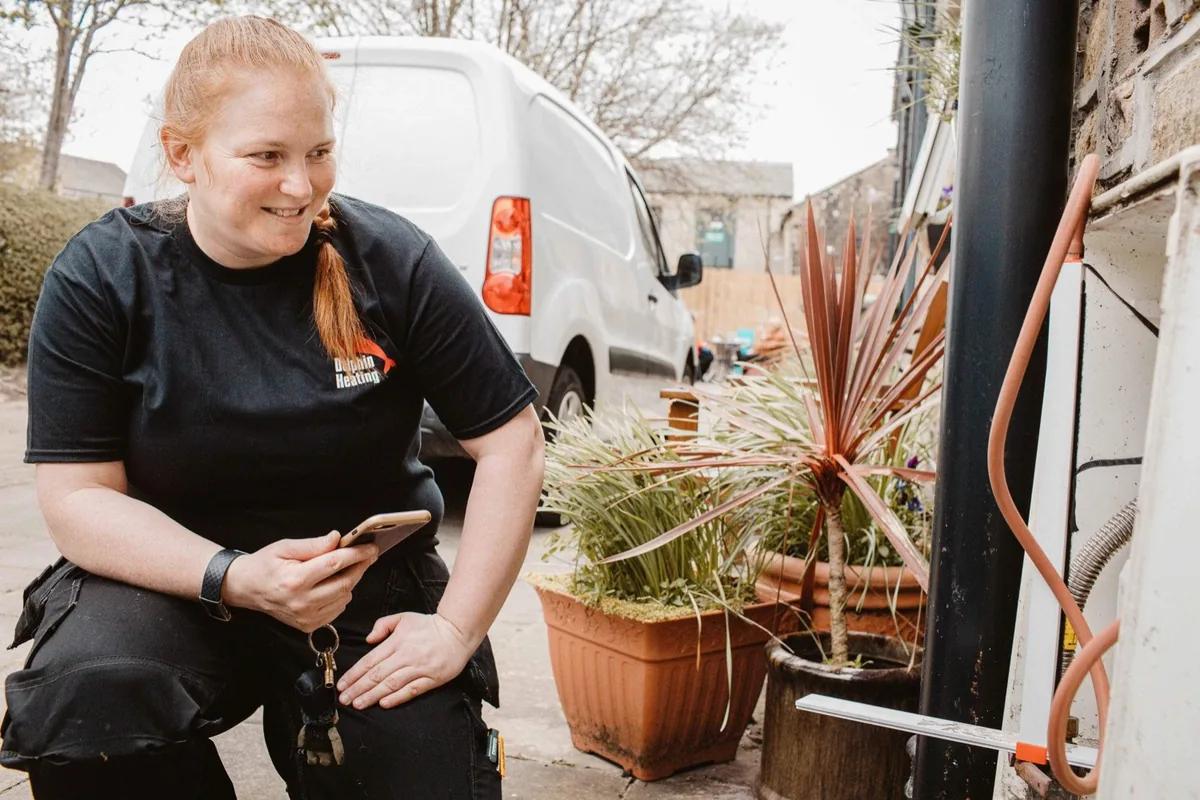
Specific enough that a stranger could repeat it. Heating engineer is a category. Gas Safe registered engineer, more than 25 years in the trade, heating and gas work for homes in and around Huddersfield, and a woman, which plenty of customers specifically want: that is a description an assistant can match to a question. Dolphin Heating’s site says something close to it in its first lines, and it is the reason the business is named when someone asks for a female gas engineer in Huddersfield.
Each service you want work for needs the same treatment on its own page: what it is, who it is for, where you do it, what it costs if you can say, and one example. RB Electrical in Halifax did that for EV charging among other services, and the enquiries have averaged around two a week for five years.
Does AI need to know where you work?
Yes, and precisely. Local questions are the ones assistants get asked most about small businesses, and where is the first filter. A registered address, the towns you actually cover, and the areas you do not, all help. Vague coverage cuts both ways: a Huddersfield firm that says it covers the whole of Yorkshire may be offered to a customer in Scarborough it would never drive to, and passed over for the Holmfirth job it wanted.
Bond Brickwork is a useful case. The firm is in Brighouse, its site says Huddersfield, and the HD6 postcode makes both true. Its project pages then name the developments and the towns, so an assistant asked about housing sites in Yorkshire has specific places to match, which is part of why it is recommended by AI search.
What proof does an AI look for before it recommends a company?
Evidence it can find in more than one place. Reviews on Google that mention the job and the town. Named projects with your own photographs and a date. Accreditations spelled out, Gas Safe or NICEIC or CHAS, with the registration number where you can show it. A founder or team page with real names. Third-party mentions: a supplier’s case study, a local newspaper, a trade association listing. A model is unlikely to name a business on its own say-so, and nothing you write about yourself carries the weight of something a customer or a supplier wrote about you.
Where does this information have to live?
On your website first, in plain sentences on the page, because that is what gets read and quoted. Then in structured data behind the page, which is a machine-readable copy of the same facts, useful and not magic. Then on your Google Business Profile, which feeds Google’s AI answers directly and reaches the others through the sites that copy it. Then in the directories and profiles that already exist for your trade. Same facts, same wording, four places. A PDF brochure, an Instagram bio and a video with no description do not count, because a model cannot reliably read any of them.
How do I find out what AI currently thinks my company is?
Ask it to describe you. Type the company name and the town into ChatGPT, Gemini and Perplexity with the question what does this business do, and read the answer as if a customer had. Wrong trade, wrong town, a service you stopped doing in 2019, a competitor’s details mixed with yours: each of those points at a source that needs fixing, and the assistant will usually tell you which source if you ask it. That half an hour is the start of every piece of GEO work we do.